

Red Flags to Observe During Land Due Diligence in Kenya Before Buying Land
Buying land is one of the most important investments you can make. Whether you are purchasing residential plots, agricultural land, commercial property, or land for future investment, proper due diligence is essential before committing your money.
At PrimeSilver Investments Ltd, we believe that an informed buyer makes better investment decisions. Land due diligence should not begin only when you visit the Ministry of Lands for a land search or engage a surveyor. It starts much earlier, with understanding your needs, evaluating your real estate agent, and observing the condition of the property on the ground.
In Kenya, buyers should be alert to warning signs that may indicate ownership disputes, boundary conflicts, unauthorised sales, access problems, or other complications that could affect the use and transfer of a property.
Here are the major red flags to observe before buying land in Kenya.
1. Understand What You Want Before Searching for Land
Before you begin searching for land for sale in Kenya, clearly define your investment goals.
Ask yourself the following questions:
- What is the purpose of purchasing the land?
- Are you buying for residential development, farming, commercial use, or speculation?
- Which location best suits your needs and budget?
- How much can you comfortably afford, including legal fees, stamp duty, survey costs, and other transaction expenses?
- Do you need immediate access to water, electricity, roads, schools, hospitals, or other social amenities?
Your intended use of the land matters because not every property is suitable for every purpose. A parcel advertised as agricultural land may have restrictions that affect subdivision or development. Similarly, a plot intended for commercial use may require confirmation of the applicable zoning and planning requirements.
Red flag: Buying land simply because the price is attractive without understanding its location, permitted use, access, and suitability for your intended purpose.
2. Vet Your Realtor Before Trusting Them With Your Money.
Your real estate agent plays an important role in your land-buying journey. A reliable realtor should help you access accurate property information, arrange site visits, explain the purchasing process, and guide you towards the appropriate due diligence checks.
Before engaging a realtor, investigate their reputation and professional background.
Consider the following questions:
- How many projects have they previously handled or delivered?
- Can they provide verifiable references from previous clients?
- What do their clients say about their services?
- Do they communicate openly and answer questions honestly?
- Are they willing to support independent land searches and survey verification?
- Are they transparent about the seller, ownership documents, pricing, and payment terms?
- Where applicable, are they registered or authorised to practise as required under Kenyan law?
Do not rely entirely on social media followers, attractive advertisements, office appearances, or persuasive sales presentations. Verify claims independently.
Red flags include a realtor who discourages you from conducting a land search, pressures you to pay immediately, refuses to identify the registered owner, or promises guaranteed profits without explaining the risks.
A trustworthy realtor should welcome reasonable questions and encourage you to verify every important detail before making a payment.
3. Conduct a Careful Site Visit.

A physical site visit is a critical step when buying land. Do not purchase property based solely on photographs, videos, maps, or promises made by a salesperson.
Visit the actual property and, where necessary, return with a qualified surveyor.
Check the beacons.
Beacons help identify the boundaries of a parcel of land. During your site visit, observe whether the visible beacons appear intact and whether the boundaries are consistent with the information provided by the seller.
Red flag: Missing, displaced, damaged, or scattered beacons that cannot be satisfactorily explained.
However, missing or disturbed beacons do not automatically mean that the land is fraudulent. They are a reason to request a professional boundary verification before proceeding.
Never rely on an agent's explanation alone when the physical boundaries are unclear.
Observe abandoned or demolished houses
If the land is in a developed or partially developed neighbourhood, observe the surrounding properties.
Several abandoned houses, demolished buildings, or unfinished developments may warrant further investigation.
Find out whether the properties were abandoned because of ordinary financial difficulties, construction challenges, access problems, disputes, planning restrictions, or other circumstances.
Red flag: A pattern of abandoned or demolished developments accompanied by reports of ownership disputes, contested boundaries, access difficulties, or planning complications.
Remember that abandoned buildings alone do not prove that a property is unsafe to purchase. Investigate the circumstances before drawing conclusions.
Confirm access roads and neighbouring developments
Check whether the property has practical and lawful access. Observe the condition of access roads, nearby settlements, drainage, utilities, and neighbouring developments.
Confirm whether the access road is public, legally recognised, or supported by the necessary rights of way.
Do not assume that a road visible on the ground guarantees permanent legal access.
4. Conduct an Official Land Search
Once you have identified a property and the registered ownership details, carry out an official land search through the relevant Ministry of Lands or land registry channels.
A land search helps establish important information recorded in the land register.
Depending on the applicable land registration system, the search can help confirm:
- The registered proprietor or owner.
- The registered parcel details and recorded acreage or size.
- The title or registration particulars.
- Registered charges, cautions, restrictions, or other encumbrances reflected in the register.
- Other relevant entries affecting the property.
Compare the search results with the title deed and the information supplied by the seller.
Red flags include:
- The registered owner is different from the person selling the land, with no satisfactory legal authority to sell.
- The parcel details do not match the documents presented.
- The seller refuses to facilitate an official search.
- There are unexplained cautions, restrictions, charges, or ownership disputes.
- The records raise questions about the existence or identity of the parcel.
A land search is essential, but it should not be treated as the only due diligence step. It does not, by itself, establish the physical boundaries on the ground or resolve every possible dispute.
Where discrepancies arise, pause the transaction and seek clarification from the relevant registry and a qualified advocate.
5. Engage a Qualified Surveyor for Physical Verification.
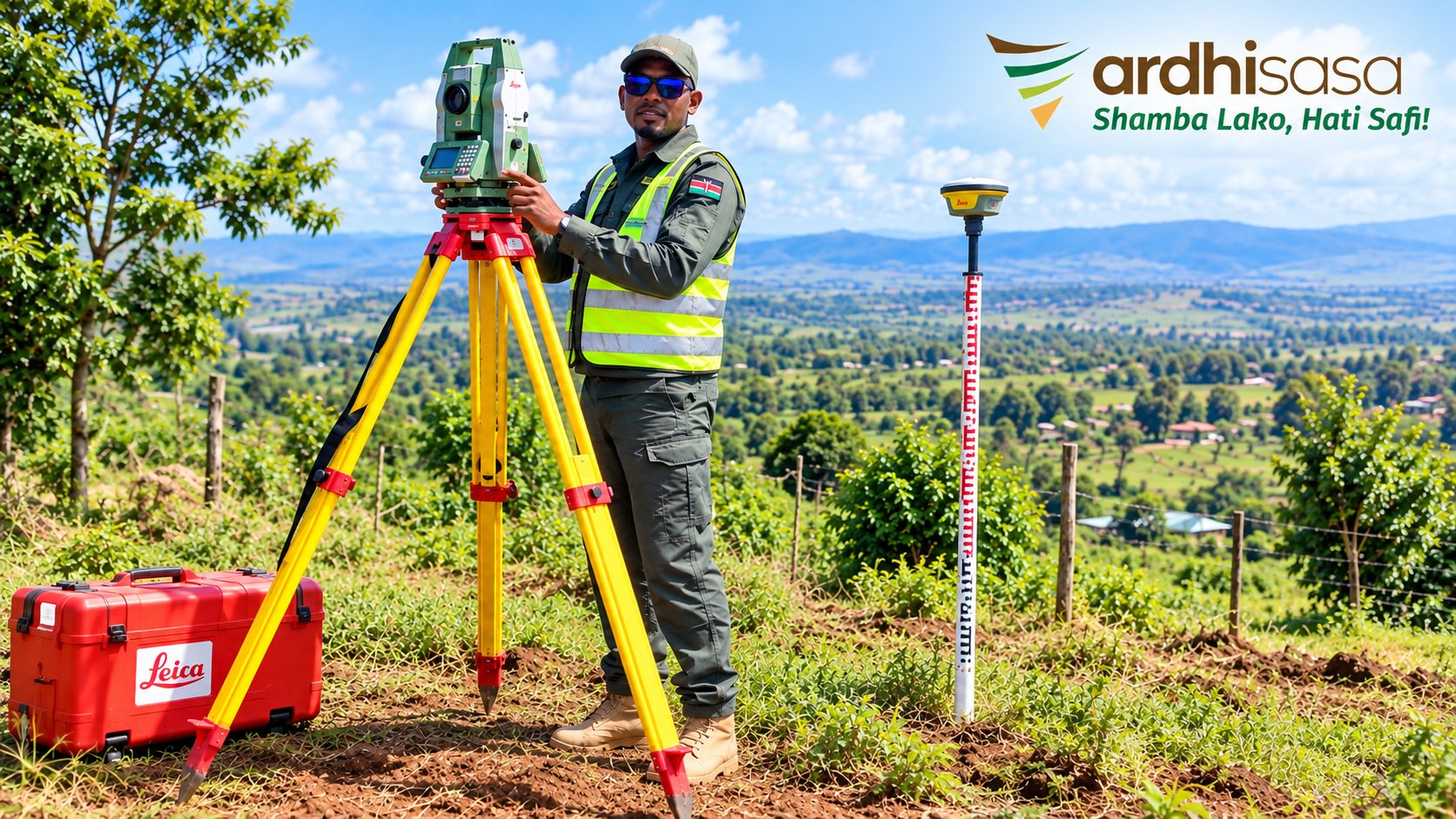
After reviewing the ownership documents, engage a qualified surveyor to verify the property on the ground.
The surveyor's role is particularly important when confirming the parcel's location, size, boundaries, and relationship to official survey records.
Beacon confirmation
Ask the surveyor to identify and verify the property's boundary beacons. This helps establish whether the parcel on the ground corresponds with the land being offered for sale.
Location confirmation using the Registry Index Map (RIM)

Where applicable, the surveyor should consult the relevant Registry Index Map or other official cadastral records to establish the parcel's location and relationship to neighbouring parcels, roads, and other mapped features.
Do not rely only on a salesperson pointing out a plot in a large subdivision.
Confirm the actual size against the title deed
The surveyor should check whether the measured parcel corresponds with the registered acreage or dimensions.
For example, if a property is advertised as a 50 × 100-foot plot, ask the surveyor to verify that the actual parcel corresponds with the stated dimensions and the relevant records.
Red flags include:
- The ground measurements differ materially from the advertised or registered size.
- The seller points out a different parcel from the one identified in the documents.
- Boundaries overlap with neighbouring properties.
- The parcel's location differs from the official survey records.
- There is an unexplained discrepancy between the survey information and the title documentation.
Resolve these issues before paying the purchase price or signing documents that commit you to an uncertain transaction.
6. Verify the Seller and Follow Safe Payment Procedures
One of the most important rules when buying land in Kenya is to establish who is legally entitled to sell the property.
Whenever possible, verify the seller's identity against the registered ownership records and follow the payment arrangements set out in a properly drafted sale agreement.
Payments should ordinarily be made to the registered owner or through another lawful arrangement expressly authorised and documented by the parties.
If someone other than the registered owner is selling the property, establish the legal basis of their authority.
Depending on the circumstances, this may involve a valid power of attorney, a properly authorised representative, a company resolution, probate or succession documentation, or other legally sufficient authority.
Red flags include:
- Being instructed to pay an unrelated third party without a clear legal explanation.
- A seller refusing to provide identification or ownership documentation.
- Different people claiming authority to sell the same parcel.
- Pressure to pay a deposit before the seller's authority is verified.
- Requests for cash payments without proper documentation or acknowledgement.
- Changes to the agreed payment account at the last minute without independent verification.
Keep payment records, receipts, signed agreements, and relevant correspondence.
Never assume that possession of a title deed automatically gives someone the legal authority to sell the property. Verify the registered ownership and the seller's legal capacity to transact.
7. Engage an Advocate to Protect Your Interests
A qualified advocate experienced in Kenyan conveyancing should guide you through the legal aspects of the transaction.
The advocate should review the title documents, conduct or coordinate the necessary legal checks, prepare or review the sale agreement, advise on payment conditions, and guide the transfer process.
Depending on the transaction, the advocate may also help confirm whether additional consents, clearances, company approvals, succession documents, or other legal requirements apply.
What if the seller will not be available for the transfer process?
Where the vendor cannot personally attend a required transaction stage, discuss the appropriate legal arrangements with your advocate.
A valid power of attorney may be appropriate in certain circumstances, but it must be properly prepared, executed, and accepted for the intended purpose. It is not automatically required in every transaction.
The advocate should establish whether the document is necessary and whether it satisfies the applicable requirements for registration, transfer, and any relevant Land Control Board process.
For agricultural land transactions subject to Land Control Board consent, confirm the applicable consent requirements and deadlines before proceeding.
Red flags include:
- A seller refusing to cooperate with the formal transfer process.
- An agent insisting that legal representation is unnecessary.
- A power of attorney that cannot be verified or does not grant the necessary authority.
- Pressure to complete payment before essential legal checks and transfer conditions are satisfied.
- An agreement that leaves the buyer exposed if the seller cannot complete the transfer.
Do not allow urgency or attractive pricing to replace proper legal safeguards.
8. Confirm Approvals, Restrictions, and Other Property Requirements
Depending on the property and intended use, additional checks may be necessary.
For agricultural land, confirm whether Land Control Board consent applies. For subdivided plots, establish that the subdivision and resulting parcel documentation are properly supported by the relevant approvals and records.
You should also investigate applicable land rates, land rent where relevant, planning restrictions, access rights, easements, and other matters that could affect ownership or development.
Where the property is being sold by a company, family, estate, or representative, establish that the relevant approvals and legal authority are in place.
Red flag: A seller claiming that every approval is complete but refusing to provide verifiable supporting documentation.
The exact checks will depend on the property's location, registration regime, land classification, and intended use. Your advocate and surveyor can help identify what applies to the specific parcel.
9. Do Not Let a Cheap Price Rush Your Decision
Affordable land can offer excellent opportunities, but an unusually low price should prompt additional questions.
Ask why the seller is disposing of the property below the prevailing market price. Compare similar parcels in the area, investigate the property's condition and documentation, and determine whether there are outstanding obligations or disputes.
A low price is not proof of fraud. However, it should not be used as a reason to skip due diligence.
Be cautious when a seller combines an unusually attractive offer with extreme urgency, limited documentation, refusal of independent verification, or demands for immediate payment.
A genuine investment opportunity should withstand reasonable scrutiny.
10. Your Land-Buying Due Diligence Checklist
Before committing your money, make sure you have addressed the following:
- [ ] Clearly defined the purpose, location, and budget for the land.
- [ ] Vetted the realtor and checked their professional background and reputation.
- [ ] Visited the actual site and assessed the surrounding area.
- [ ] Inspected the beacons and requested professional verification where necessary.
- [ ] Conducted an official land search and compared the results with the title documentation.
- [ ] Engaged a qualified surveyor to confirm the location, boundaries, and size.
- [ ] Verified the seller's identity, registered ownership, and legal authority to sell.
- [ ] Engaged an advocate to review the sale agreement and relevant legal requirements.
- [ ] Confirmed applicable approvals, consents, restrictions, and outstanding obligations.
- [ ] Agreed on secure, documented payment arrangements and clear transfer conditions.
If any of these checks reveals a serious discrepancy, pause the transaction until the issue is resolved satisfactorily.
Why Choose PrimeSilver Investments Ltd?

At PrimeSilver Investments Ltd, we believe that successful property investment begins with information, transparency, and responsible decision-making.
Our approach emphasises helping clients understand the land-buying process, inspect properties, ask the right questions, and appreciate the importance of legal and survey verification before completing a purchase.
We encourage prospective buyers to undertake independent due diligence and consult the appropriate professionals before committing their money.
Whether you are looking for affordable residential plots, agricultural land, commercial plots, or land for long-term investment, take the time to understand the property and verify the relevant documents.
Our principle is simple: do not buy land because you have been convinced to buy it; buy land because you have verified what you are buying.
Conclusion: Due Diligence Is Your First Line of Protection
Buying land in Kenya should be an informed decision, not a gamble. From vetting your realtor and observing the site to conducting an official land search, engaging a surveyor, verifying the seller, and involving an advocate, every stage contributes to a safer transaction.
Remember that no single document or professional check guarantees that every possible risk has been eliminated. A combination of legal, registry, physical, and financial verification offers stronger protection.
Take your time, ask questions, verify the facts, and never allow pressure to make you overlook warning signs.
Looking for genuine land for sale in Kenya? Contact PrimeSilver Investments Ltd for property information and guidance on the land-buying process.
PrimeSilver Investments Ltd — Partnership for Growth.